
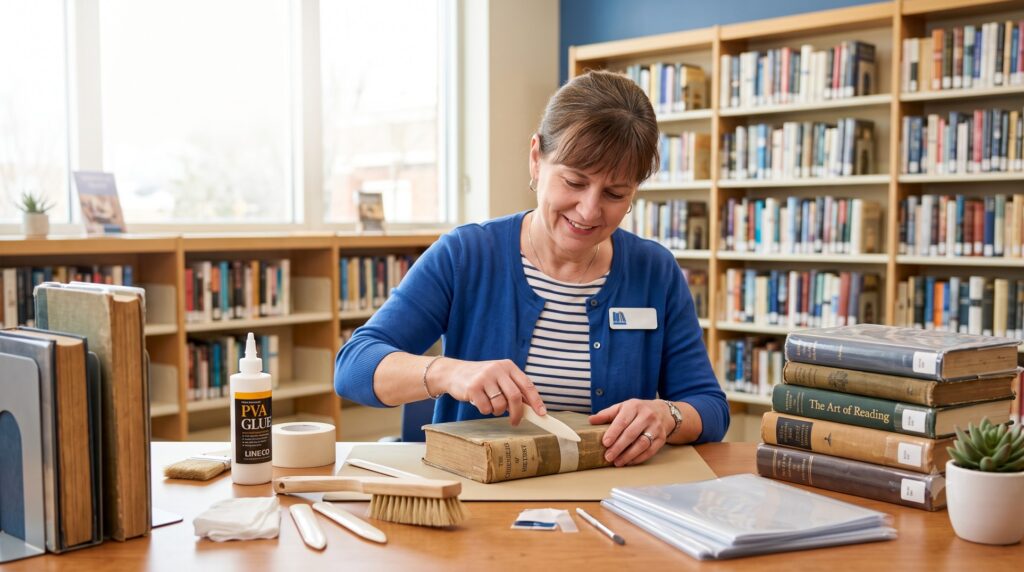
A book does not fall apart all at once. It happens slowly. A spine cracks after being opened the same way one too many times. Pages start yellowing at the edges. By the time someone notices, the damage is done.
Most libraries lose books this way. Not to theft but to everyday use. It builds up quietly, shelf by shelf.
That is where book care supplies make a real difference. Used consistently, they keep collections in good shape for decades. Basic maintenance most people overlook until a book is beyond saving.
What Counts as Book Care Supplies (And Why the Category Is Bigger Than You Think)
Most people think book care just means tape. It goes much further than that. The category includes a range of tools, each built for a specific problem:
- Protective covers shield books from moisture, oils, and shelf friction during everyday handling
- Archival repair tape fixes torn pages and cracked spines without damaging the paper
- pH-neutral adhesives reattach loose covers safely, without breaking down the material over time
- Dry cleaning pads remove surface dirt and pencil marks without scratching pages
- Binding reinforcement strips support weakened spines before they split completely
One problem, one product. Simple as that.
Three Book Care Supplies Worth Knowing About
Archival Book Repair Tape
Regular tape destroys books slowly. It yellows, stiffens, and pulls the paper apart when you try removing it later. Archival book repair tape does the opposite. It is acid-free, age-resistant, and designed to peel off cleanly without leaving damage behind. It handles torn pages, cracked spines, and loose covers with ease. School libraries dealing with heavily borrowed picture books and reference titles will get the most use out of this one.
Clear Polypropylene Book Cover Protectors
Books that change hands daily take a real beating. Finger oils, moisture, and shelf friction build up faster than most people expect. A clear polypropylene cover sits over the book and absorbs that damage instead. It is wipe-clean, tear-resistant, and does not alter how the cover looks underneath. The non-adhesive version is the smarter choice for older titles. One good cover protector can add years to a book’s circulation life, which matters a lot when budgets are tight.
pH-Neutral Dry Cleaning Pad
This one surprises most people. It looks basic but solves a problem that is easy to underestimate. Surface dirt, pencil marks, and smudges are common in donated or older collections. Erasing by hand causes micro-tears over time. A dry cleaning pad lifts that grime away without water, chemicals, or rough handling. It works safely on both coated and uncoated paper. Archivists and rare book collectors rely on it regularly. Once you see what it does, managing a collection without one feels like a gap.
The Real Benefits of Stocking Book Care Supplies in Your Library
It Saves More Money Than You Expect
Replacing a damaged book costs more than most people track carefully. When you factor in ordering, processing, and cataloguing a new copy, the number adds up fast. Repairing that same book with basic supplies costs a fraction of that. A school library repairing 50 books a year instead of replacing 20 is already saving a meaningful amount. Those savings belong somewhere more useful.
Books Stay in Circulation Longer
A well-protected book does not disappear from the shelf prematurely. Cover protectors, spine reinforcement, and timely repairs keep popular titles available and readable for years longer than they would last otherwise. That matters when readers are waiting on a title, and replacements are not in the budget.
Some Books Cannot Be Replaced
Out-of-print titles are gone once they are gone. Donated books, older reference materials, and local history collections fall into this category more often than people realize. Repair is not just practical in those cases. It is the only option.
Readers Notice the Difference
A clean, well-kept book feels different to hold. It signals that someone is paying attention. Libraries that maintain their collections consistently tend to see better reader engagement and fewer complaints about material quality. That is not a small thing.
It Builds a Habit That Protects the Whole Collection
Once book care becomes a regular part of library maintenance, the overall collection stays in better shape. Small problems get caught early. Big repair jobs become rare. That consistency is where the real long-term value lives.
Who Actually Needs Book Care Supplies and When to Use Them
The short answer is anyone who owns more than a handful of books. More specifically:
- School libraries deal with young readers who are rough on books without meaning to be. Covers and repair tape earn their place here daily
- Public libraries handle high checkout volumes across all age groups, where wear accumulates fast
- Home collectors often ignore maintenance until damage is visible, which is usually too late
Practical Tips for Choosing Book Care Supplies That Actually Work
- Always check that materials are acid-free before buying
- Match the product to the book type, not just the problem
- Avoid generic stationery alternatives; the chemistry is different and the damage shows up later
- Buy adhesives in small quantities as they have a shelf life
A Library That Lasts Is One That Is Looked After
Books are not permanent by default. They need attention, and the right supplies make that attention practical rather than complicated.
The damage that ends a book’s life rarely happens all at once. It builds up through small moments of handling, storage, and neglect. Catching it early is always easier than dealing with it later.
Book care supplies exist for exactly that reason. They are not complicated tools. They are just the difference between a collection that holds up and one that quietly falls apart.