Healthcare facilities face unique security challenges that require specialized solutions. Hospitals and clinics operate around the clock, manage sensitive patient information, store valuable medical equipment, and accommodate thousands of visitors, patients, and staff members each day. As healthcare environments become increasingly complex, traditional security methods are no longer sufficient to address modern threats and operational demands.
This is where medical security systems are making a significant impact. Advanced security technologies are transforming healthcare facilities by enhancing patient safety, improving access control, protecting critical assets, and supporting efficient operations. By integrating smart technologies with healthcare infrastructure, hospitals and clinics can create safer, more secure, and more responsive environments.
The Growing Importance of Security in Healthcare
Healthcare facilities are responsible for protecting not only people but also sensitive data, expensive equipment, medications, and critical infrastructure. Security incidents can disrupt patient care, compromise privacy, and create significant financial and reputational consequences.
Common healthcare security challenges include:
- Unauthorized access to restricted areas
- Theft of medical equipment
- Medication diversion
- Patient safety concerns
- Workplace violence
- Data security risks
- Emergency response coordination
To address these challenges effectively, healthcare organizations are increasingly investing in intelligent medical security systems that provide comprehensive protection while supporting day-to-day operations.
What Are Medical Security Systems?
Medical security systems are integrated security solutions specifically designed for healthcare environments. Unlike traditional security measures, these systems combine multiple technologies to create a unified approach to facility protection.
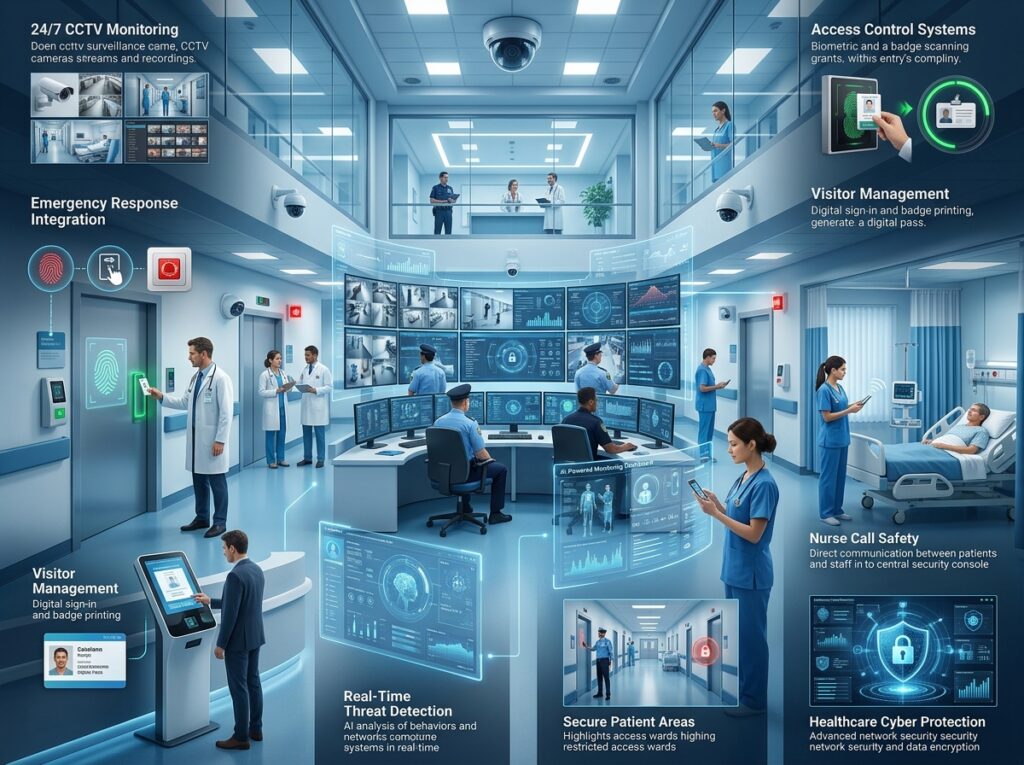
A modern medical security system may include:
- Access control systems
- Video surveillance
- Intrusion detection
- Emergency communication systems
- Visitor management platforms
- Asset tracking technologies
- Mobile security solutions
- Real-time monitoring tools
These systems work together to provide continuous visibility, control, and protection across healthcare facilities.
Enhancing Patient Safety
Patient safety remains the highest priority for hospitals and clinics. Smart medical security systems help healthcare providers create safer environments by controlling access to sensitive areas and monitoring facility activities in real time.
Restricted areas such as intensive care units, maternity wards, pharmaceutical storage rooms, and operating theatres require strict security controls. Access control technologies ensure that only authorized personnel can enter these locations.
In maternity wards, for example, security systems can help prevent infant abduction by monitoring movement and triggering alerts if unauthorized activity is detected. These advanced protections provide peace of mind for patients, families, and healthcare providers alike.
Strengthening Access Control
One of the most valuable components of modern medical security systems is intelligent access control. Traditional keys can be lost, duplicated, or stolen, creating security vulnerabilities.
Smart access control solutions utilize technologies such as:
Key Card Access
Healthcare staff can gain entry using secure identification cards linked to personalized access permissions.
Mobile Credentials
Authorized personnel can use smartphones or digital credentials to access designated areas quickly and securely.
Biometric Authentication
Fingerprint scanning, facial recognition, and other biometric technologies provide highly secure access verification.
These systems allow healthcare administrators to manage permissions centrally and respond rapidly to changing security requirements.
Improving Emergency Response Capabilities
During emergencies, every second matters. Medical security systems play a critical role in supporting rapid and coordinated responses.
Integrated security platforms can communicate with:
- Fire alarm systems
- Nurse call systems
- Emergency communication networks
- Building management systems
- Public address systems
When an emergency occurs, automated actions can be triggered instantly. For example, evacuation routes may unlock automatically during a fire, while certain areas can be secured immediately during security threats.
This level of integration improves coordination and helps healthcare facilities respond more effectively during critical situations.
Advanced Video Surveillance Solutions
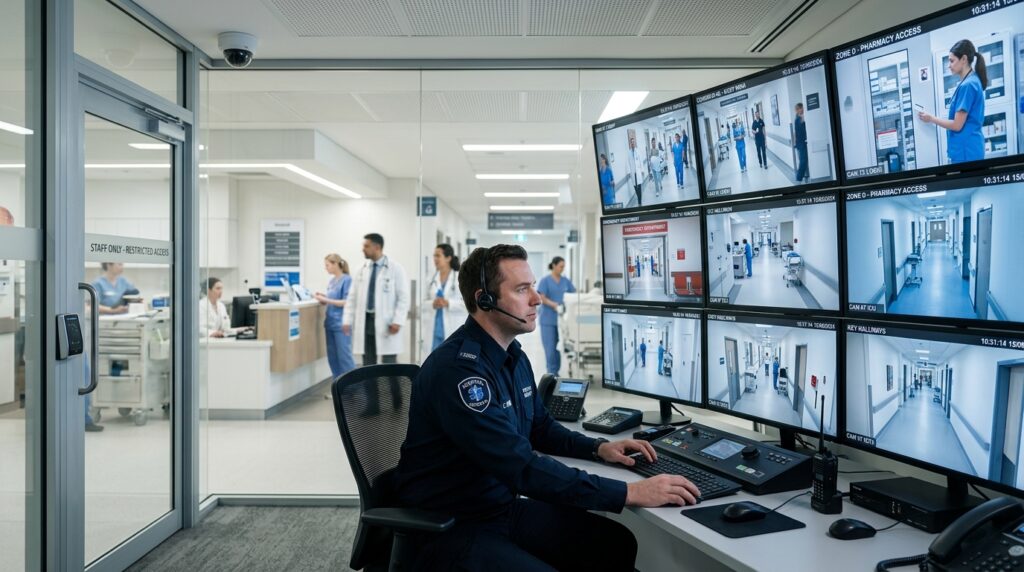
Video surveillance technology has evolved significantly in recent years. Today’s medical security systems incorporate intelligent surveillance capabilities that go beyond simple recording.
Smart cameras can provide:
- High-definition video monitoring
- Motion detection
- Facial recognition
- Behavioral analytics
- Automated alerts
- Remote monitoring access
Security personnel can identify suspicious activities quickly and respond before incidents escalate. Additionally, recorded footage supports investigations and helps healthcare facilities improve future security planning.
These advanced surveillance capabilities contribute to both security and operational efficiency.
Protecting Valuable Medical Assets
Hospitals and clinics rely on expensive medical equipment to provide patient care. The loss or theft of critical assets can disrupt operations and impact treatment quality.
Medical security systems often include asset tracking technologies that allow healthcare providers to monitor equipment locations in real time.
Items commonly tracked include:
- Diagnostic equipment
- Wheelchairs
- Infusion pumps
- Portable monitors
- Emergency response equipment
Real-time asset visibility helps reduce losses, improve resource utilization, and ensure that essential equipment is available when needed.
Enhancing Visitor Management
Healthcare facilities welcome a constant flow of visitors, contractors, vendors, and patients. Managing this traffic effectively is essential for maintaining security without creating unnecessary inconvenience.
Modern visitor management solutions integrated within medical security systems provide:
- Digital registration
- Visitor identification verification
- Temporary access credentials
- Visitor tracking
- Automated check-in processes
These tools help healthcare facilities maintain secure environments while ensuring positive visitor experiences.
In emergency situations, visitor management systems also provide valuable information regarding facility occupancy and movement.
Supporting Healthcare Compliance Requirements
Healthcare organizations must comply with strict regulations related to patient privacy, facility security, and operational safety.
Medical security systems assist compliance efforts by providing detailed audit trails, access records, surveillance documentation, and incident reporting capabilities.
These records support accountability and demonstrate adherence to regulatory requirements. Comprehensive documentation can also assist during inspections, audits, and investigations.
Leveraging Artificial Intelligence and Automation
Artificial intelligence is becoming an increasingly important component of healthcare security technology. AI-powered medical security systems can analyze vast amounts of data and identify patterns that may indicate security threats.
Examples include:
- Detecting unusual access attempts
- Identifying suspicious behavior
- Monitoring crowd activity
- Predicting potential security risks
- Automating security alerts
Automation reduces the workload on security personnel while improving response times and overall effectiveness.
As AI technology continues to evolve, healthcare facilities will gain access to even more advanced security capabilities.
Enabling Remote Monitoring and Management
Cloud-based platforms have transformed how healthcare facilities manage security operations. Administrators and security teams can monitor systems remotely through secure dashboards and mobile applications.
Remote management capabilities provide:
- Real-time alerts
- Live video access
- Access control management
- Incident monitoring
- System health reporting
This flexibility allows healthcare organizations to maintain visibility and control even when personnel are not physically present at the facility.
Remote monitoring also supports faster decision-making and improved operational resilience.
The Future of Medical Security Systems
The future of healthcare security will be shaped by greater connectivity, automation, and intelligence. Emerging innovations such as predictive analytics, touchless authentication, cloud integration, and smart building technologies will continue to enhance healthcare security strategies.
Future medical security systems will become more proactive, enabling facilities to identify risks before incidents occur and respond more effectively to evolving threats.
Healthcare organizations that invest in modern security technologies today will be better prepared to meet future challenges while maintaining high standards of patient care and operational excellence.
Conclusion
Smart medical security systems are transforming hospitals and clinics by creating safer, more secure, and more efficient healthcare environments. Through advanced access control, intelligent surveillance, emergency response integration, asset protection, and AI-powered monitoring, these systems provide comprehensive protection for patients, staff, visitors, and critical resources.