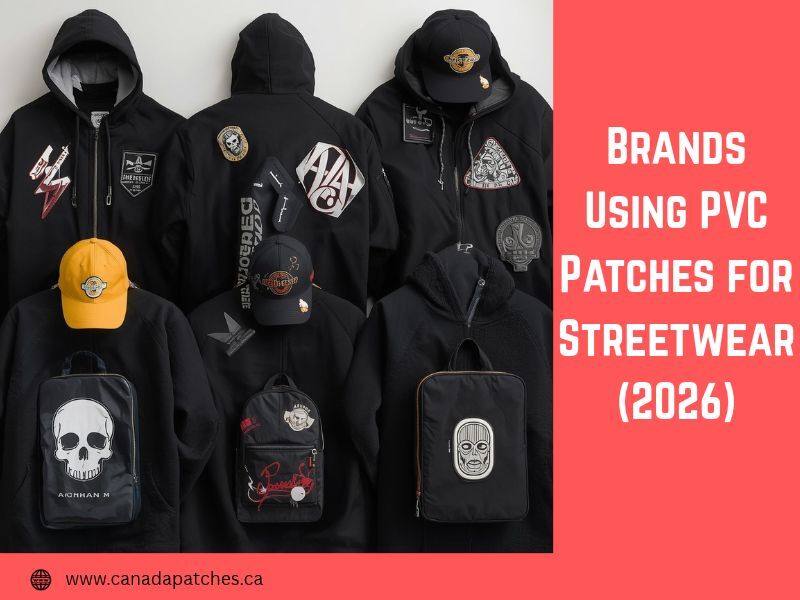
PVC patches are moulded, rubber-like emblems that have replaced stitched embroidery on a lot of streetwear pieces you see today. Unlike thread-based patches, they’re built from flexible plastic, which means they hold sharp 3D detail, resist water, and don’t fray after a few washes.
Brands like Off-White and Champion already use them on jackets, hoodies, and slides, and the reason is simple. PVC can offer better resistance to moisture, abrasion, and fraying than some fabric-based patch options.
This shift isn’t just about looks. It’s about patches that survive rain, friction, and repeated use without losing shape or colour. That combination of durability and a bold, raised finish is exactly why more labels are choosing PVC over traditional embroidery this year.
PVC Patches vs Regular Patches
Regular patches are made by stitching thread into fabric, which works fine for simple logos but wears down over time. Wash a few times and the threads start to fray or lose their sharpness.
PVC patches are moulded rather than stitched, so they generally retain their shape well through repeated washing and everyday use. Water doesn’t soak in, dirt wipes off, and the surface stays intact even after regular outdoor use.
The bigger difference shows up in the design itself.
- Embroidery struggles with fine detail or layered effects,
- Whereas PVC can hold sharp edges, raised 3D layers, and clean lines that thread simply can’t recreate.
That’s why brands are increasingly turning to local Custom Patches CA suppliers to get similar durability and finish without relying on overseas production timelines.
Brands Leading the PVC Patch Trend
More labels are moving away from stitched logos and picking PVC instead, especially for pieces meant to handle daily wear. Here’s a quick look at who’s actually using them and how.
- Off-White
Off-White uses rubberized PVC badges on technical and industrial-style outerwear, giving pieces a rugged, functional edge.
- Champion
Champion applies PVC logos on its slides, hoodies, and everyday gear, keeping the branding visible without adding bulk or extra material.
- Carhartt WIP
Carhartt WIP leans on rubberized, PVC-style branding on jackets and caps as part of its workwear-rooted aesthetic, fitting the rugged, built-to-last identity the brand is known for.
- The North Face
The North Face uses rubberized patch branding on outerwear and bags, pairing it with the weatherproof materials the brand already builds its gear around.
- Supreme
Supreme has also released limited PVC patch pieces, though it’s a smaller part of their overall drops compared to the brands above.
- Canadian Streetwear Labels
This same shift is showing up closer to home too. Independent Canadian streetwear labels are choosing PVC when they need a design that stays crisp long after the first wear. It’s less about following a trend and more about matching what bigger brands already figured out: PVC holds up better on pieces meant for daily wear.
2D vs 3D PVC Patches
PVC patches usually come in two builds, and each one suits a different kind of design.
2D PVC patches are flat with a single raised layer, which makes them a solid pick for logos or text-heavy designs where clarity matters more than depth. 3D PVC patches use multiple layers to create a raised, sculpted look, giving bold graphics or tactical-style branding more presence on the fabric.
Here’s a quick side-by-side:
| Style | Best For | Look |
| 2D PVC | Logos, text-heavy designs | Flat, clean |
| 3D PVC | Bold branding, tactical gear | Raised, layered |
Neither style is better across the board. It comes down to what the design needs to communicate and where the patch is going to sit on the garment.
Popular Placement Spots for PVC Patches
Placement affects both how a design reads and how long it lasts day to day. Here’s where PVC patches are showing up most on streetwear right now.
- Jackets and Outerwear
The chest and back panel remain the top spots for jackets, giving the patch enough room to stay visible without crowding the rest of the design.
- Caps and Bags
Caps typically carry a single front logo patch, while bags use PVC on the front panel or straps where it can handle daily handling and weather exposure.
- Sleeves and Smaller Accents
Sleeves are often used for smaller, secondary patches that add detail without competing with the main design.
- Velcro and Modular Backings
A lot of brands are pairing PVC with Velcro backing now, letting people swap patches out instead of committing to one design permanently.
This modular setup works especially well for demand around PVC Patches Canada, where rain and snow resistance actually matters through most of the year, not just as a design feature.
What to Consider Before Ordering PVC Patches
If you’re planning to create PVC patches for a clothing line or personal project, a few details are worth deciding before placing an order.
- Backing: Velcro for interchangeable designs, sewn or iron-on for a permanent finish
- Size: most brand logos fall in the 2 to 4 inch range, enough to show detail without overwhelming the garment
- Finish: matte and metallic remain popular, with glow-in-the-dark showing up more in 2026 designs
- Weather resistance: confirm the patch is rated for outdoor use if it’s going on jackets, bags, or caps
These are the same details brands like Off-White and Champion get right before a patch ever ships, and they’re worth checking on a smaller order too.
Quick Questions on PVC Patches
- Is Supreme considered a streetwear brand?
Yes. Supreme is one of the most recognized streetwear brands globally, known for its drop-based releases and high-profile collaborations. It’s also released limited PVC patch designs, though brands like Off-White and Champion use PVC more consistently across their lineups.
- What is the biggest streetwear brand in the world?
Supreme is widely regarded as the most culturally influential streetwear brand, built on scarcity-driven drops and long-standing brand recognition. Its influence is part of why materials like PVC, once used mainly in tactical gear, have become mainstream in streetwear branding.
- What streetwear brands are popular in 2026?
Names like Supreme, Stüssy, BAPE, Fear of God, and Carhartt WIP remain dominant, alongside newer labels like Corteiz. Several of these brands lean into techwear-adjacent materials, which is part of why PVC patches fit naturally into current collections.
- What’s trending in streetwear right now?
Techwear and gorpcore styles are leading the shift, with water-resistant fabrics and functional detailing replacing purely decorative branding. This is a big reason PVC patches are gaining traction, since they match the durability streetwear is currently built around.
Wrapping Up
PVC patches have moved past being a passing style choice. Brands like Off-White and Champion use them because they hold up better than embroidery on pieces meant for daily wear, not just for how they look on a rack. The mix of durability, sharp 3D detail, and flexible backing options is why more labels keep coming back to PVC over stitched alternatives.
For anyone designing their own patches, the same logic applies. Choosing PVC isn’t about following a trend. It’s about picking a material that actually holds up.